Gjirokastër: A Full Day in the Stone Town
13 July 20263 min read
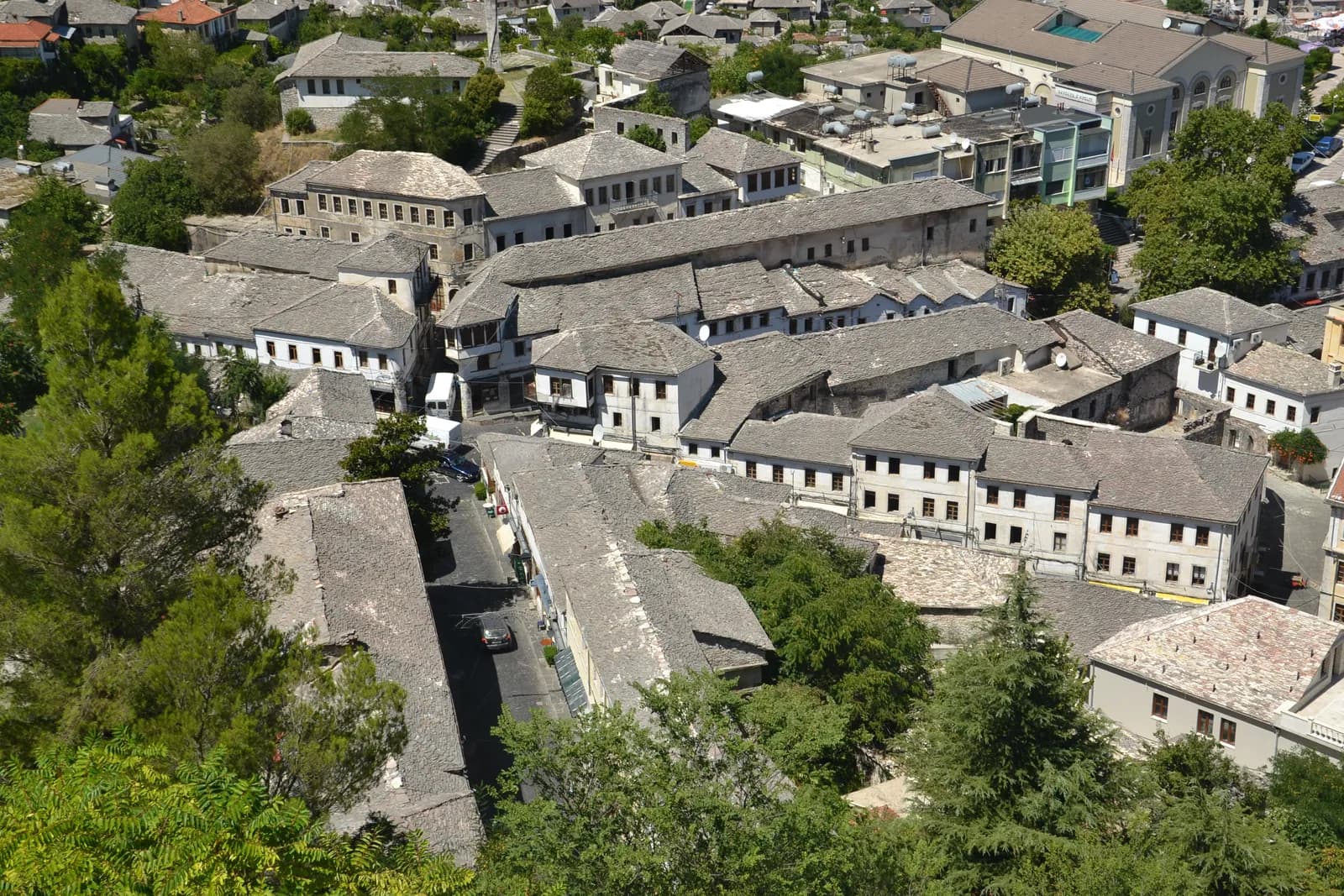
Most people know the Albanian south for its beaches. Gjirokastër is the counterweight — a town of grey stone and slate stacked up a mountainside about an hour and a half inland from the coast. Locals call it the stone city, and the name is literal: the walls, the roofs, the steep lanes underfoot are all cut from the same pale limestone, so the whole place seems to have grown out of the hill rather than been set on it.
It is a UNESCO World Heritage Site, and unlike a single monument, what is protected here is the town itself — the shape of it, the way the Ottoman-era houses climb the slope in tiers. Coming up from the sea, the change is abrupt and welcome: cooler air, long views over a wide valley, and a different Albania entirely.
The houses and the lanes
The thing to look at in Gjirokastër is the architecture. The old town is full of tower-houses — tall, fortified stone dwellings with small upper windows, timber galleries inside, and heavy slate roofs that catch the light like fish scales after rain. They were built by well-off families over the eighteenth and nineteenth centuries, half home and half stronghold, and several are open to walk through if you want to see how they were lived in.
Getting between them is part of the day. The lanes are cobbled, steep, and often slick, laid with rounded stones that were never meant for modern soles, so proper shoes matter more here than almost anywhere. Take the climbing slowly; the reward is the way each turn opens onto rooftops and valley below.
Gjirokastër is also the birthplace of Ismail Kadare, Albania's best-known novelist, who set much of his early work in these streets. You do not need to have read him to feel it — the town has the layered, slightly severe character that runs through his books.
The fortress and the bazaar
Above everything sits the castle, a long stone fortress running along the ridge with commanding views over the Drino valley on both sides. Inside, a display of old weaponry and military hardware lines the vaulted galleries, and the ramparts give the best vantage in town — the whole grey sweep of roofs below, the valley opening north and south. It is the natural high point of a visit, in both senses.
Lower down, the bazaar quarter is where the town gathers. Its stone-paved streets are lined with workshops and small traders, some selling the local textiles and carved stone, and it is an easy place to slow down, take a coffee, and let the steepness go out of your legs before the next climb.
Practical info
Getting there from Saranda is straightforward: it is roughly an hour to an hour and a half by car, heading northeast on the SH99 and then the SH78 up into the Drino valley. The road is scenic and well surfaced. There are regular buses and furgons (shared minibuses) between the two towns if you would rather not drive, though a car gives you freedom over timing.
Treat Gjirokastër as a full-day trip rather than a quick stop — the fortress, the old town, and a slow lunch fill the hours easily, and the drive each way eats into the day. Spring and autumn are the best seasons: mild, clear, and comfortable for all the climbing. Midsummer inland can be very hot by midday, so if you come in July or August, start early and save the exposed fortress walls for the cooler end of the afternoon.